Showing posts with label creative fiction. Show all posts

Sunday, April 29, 2012

Poem of the Day #2: "Endlessly Rocking"

Poetry is powerful emotion recollected in tranquility, certainly.  As the world continues its inexorable evolution, and poetry dies for the millionth time since humanity first scribbled words on clay, the shifting definitions must allow that Wordsworth's is entirely true.  The all-inclusive descriptions of "what makes a poem" are fantastic for their democratic nature, but useless in defining an art form.  I recognize the authenticity of the attempt, but I reject the utility of it.  For me, poetry is like pornography, you know it when you see it, and the vast majority of what we now see would have been better left rotting in the corner of its author's mind.


I saw a face deep in the crowd—
A face without a name
A face that—time ignoring—
Might—in my mind—not change—
And though oft I swear I can forget
It is true I never do—
Though that moment has long since passed—
I swear that face was you.

Friday, March 30, 2012

YA? Why Not?

The inimitable Ferrett Steinmetz, whose list of credits now includes a prestigious Nebula nomination, posted a link to a rather embarrassing New York Times piece that decried The Hunger Games as puerile trash.  Now, I agree with the columnist that The Hunger Games is worth about as much as a Thallid, but I fundamentally disagree with the contention that YA as a genre should be read only by, well, young adults.

This is a thallid, and no, it isn't worth anything.

Unlike the author of the New York Times piece, I've actually read most of the notable YA series, and the reason that Suzanne Collins' meal-ticket is bad is because it is sloppily written melodrama that has an infinitely superior contemporary work to compare to.

Saturday, March 17, 2012

"Foiled Again": The Evolution of Comedy Writing

If you read Shakespeare with any regularity, well, you are exactly the type of person I expect enjoys this kind of website.  But more importantly, you're probably frequently struck by how different Shakespearean comedy seems from our own.  Except, of course, for the minor detail that somehow the guy who has managed to stay in print for four centuries included more dick jokes in his plays than appear on the front page of Cracked.  Still, the biggest difference in the comedy is how little of it there actually is.  Acting troupes are forced to fluff it up, using tone and pratfalls to get to the lowest number of jokes per page that a modern audience will accept.  What you think is a hilarious joke about horses just wasn't that funny to someone who actually had to brush lice and shovel hundreds of pounds of equine shit every day.

"You mean to tell me, I don't have to use my hands?"

Candide is a riotously funny book, but the entire thing consists of droll observations and, by at least one count, seven jokes that someone would politely smile at if you were to recite them at a cocktail party.  In fact, as you move closer and closer through history to the current century, you'll find that the jokes start piling up to the point where Saturday Night Live is comprised entirely of pithy one liners and fourth wall breaking giggles.  It's as if we can't enjoy comedy unless we never have a chance to stop laughing.

We stopped laughing about nine years ago.

A page from your sitcom spec script with only one or two jokes is going to be thrown in the trash like invitations to a party at Carrot Top's homeless shelter.  That is, unless you can find a way to throw in another pop culture reference or three that can be mined for laughs.

So why is that?  Novels are much, much longer now in 2012 than they were in 1912, despite what those hefty tomes on your English professor's bookshelf suggest.  Fifty thousand words was plenty a hundred years ago, but now consumers aren't satisfied unless they get at least 1,800 pages.  

Why do we tl;dr our comedy then?  Unfortunately, and I hope I haven't led you on like Tucker Max at a sorority party, I'm not a social psychologist and I have absolutely no evidence for any of the next five hundred words or so.  But I do have ideas.

*Our attention spans are short.  Really short.  Odds are that you have at least three browser tabs open right now.  Even as you read this, you are wondering if your significant other has gone to sleep so you can Facebook stalk your ex.

*We really hate coming down from a high.  If you pick up Les Miserables and sit down to read, you enter with the expectation that you are going to be depressed.  It's in the title.  When you watch a Michael Bay movie, you expect everything to be blowing up all of the time.

So when the talky-bits start, you fidget and look around to catch people playing Words with Friends at the theater.

With comedy, you expect to laugh.  We don't have "very special" episodes any more for the same reason no one gets a colonoscopy from a camera attached to a katana.  It isn't fun, and there is always the threat of rectal bleeding.

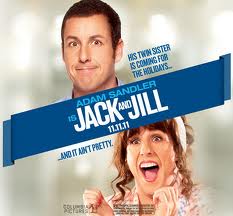
*People digest information faster.  Esprit d'escalier was a huge problem for earlier generations.  Now?  That average fifteen year old has at least five comebacks for any given situation thanks to her parents' Adam Sandler films.

She also has terrible taste in movies.

Whereas the Renaissance and medieval audience for comedy could reliably expected to walk out of the dirt, mud, and excrement soaked theatre laughing because they finally got the bit about the goat, modern audiences already knew the punchline before the pudgy friar finished talking.

*In fact, if you haven't noticed, the proliferation of "in-jokes" is exponential.  The rise of viral media and the omnipresence of pop culture virtually ensures that at least a majority of a show's audience knows exactly why it is funny to have the female lead eye a blue plastic cup warily in front of another women while glancing nervously at the camera.

*There are more jokes.  Blame twenty-first century irony for a lot of this, because self-referential humor exploded around the time that Family Guy was brought back from cancellation purgatory.  That isn't to say it didn't exist before, just that you can't buy a pack of smokes without running into nine terrible referential lines any more.

 "Wil-lem. Da-foe. Wil-lem. Da-foe." 

Moreover, it stands to reason that if something was funny to our ancestors, say, someone getting whacked in the head, that it might linger as humorous for most of us today.  Sure, a lot of the comedy from ancient Greece is as unintelligible as George Lucas' dialogue, but just about everyone knows to laugh when Oedipus finds out that he's been sleeping with his mom, right?

*Expectations have been raised.  I'm not bemoaning the death of subtlety in humor.  When I read Christopher Moore, I'm not sad because I think Vonnegut did it better.  In many cases, the trend has produced increasingly clever writers who are forced to work and demonstrate actual talent instead of a thin veneer of sarcasm.  But, more often than not, comedy is now a team effort.  Even the stand-ups, working the wasteland of the washed over nightclub scene, have teams and workshops in order to come up with enough material to fill a ninety minute special they'll probably never perform.

*Of course, some of it is just awful.  I can't stomach the thought of being forced to watch most of NBC's current line-up, and Fox has degenerated to the point that I couldn't find a use for it in the smallest room of my house.

*If you laughed at the last comment, you know why I miss sophisticated humor.  If you didn't, you probably don't know what all the fuss is about.  More than likely, Shakespeare would enjoy most of what we find on television and in the theater.  His ability to adapt to the changing taste of his audience is legen, wait for it.

"Dary.  He's going to say, 'Dary'."

But however much the Bard gets out of Barney, he would rue the day we ever cloned him every time he sees a new Happy Madison release.

Without saying a word, Katie turned and left the room.  She got in her car and drove to the teleportation pad.
Her last words before disappearing were: "I swear, I'll never disagree with an OT again."

Thursday, March 15, 2012

The Best Flavor

I am finishing up Michael J Sullivan's Riyria Revelations and am pleasantly surprised by the quality of the story.  While I wholeheartedly endorse the series, the more interesting thing to me is the author's interview.  Most specifically, this:

           "For years now I have heard few...lament that repetitive theme....they are tired of the same old hero-               
            vanquishing-evil and want something new.  Something more real, more believable.  Which to me 
            sounds like someone saying they love chocolate, the just wished it wasn't so chocolatey and that it 
            tasted more like vanilla."


Having an established genre author admit to the feelings he describes is akin to NASA spontaneously admitting that we faked the first moon landing.

"Are you sure the wind rippling isn't going to give it away?"

It drives me insane that every new speculative fiction I pick up spends a thousand pages developing a deep, resonant theme that parallels the real world.  And there will be no MacGuffin.  If I found myself wanting to read Atlas Shrugged again, I would gouge my own eyes out with a rusty spoon.

As seen in the last reasonably tolerable Kevin Costner movie.

So, you see, I don't want to read it, I get suckered in by Tor's shield on the spine.  Then I read 300,000 words of political intrigue, conspiracies, and judiciary debate about the rights of the parasite wurms of Arenon IV.  All I really wanted was a wizard burninating some orcs.

Sullivan goes on to defend his own work, which makes his Oz-like unveiling a little less impressive.  But ultimately, the idea that someone can't just write a boring old hack n' slash novel is depressing.  Joseph Campbell described thousands of concurrent mythologies that all feature similar elements.  They endured because they were entertaining and popular.  We can read them today because they are always fun.  No, KJ Parker's Engineer trilogy isn't better than Brook's Shannara work.  But it is worth spending the few days it will take to finish the books.

Similarly, the constant quest to destroy any hope we might have that our future generations will even know what a poem is has become mindbogglingly stupid.  I've got a list, here's the order of the list that it's in.

It goes Reggie, Jay-Z, Tupac, and Biggie, Andre from Outkast, Jada, Kurupt, Nas, and then me.
1)  Poetry can rhyme
2)  It can even be iambic
3)  Nothing on your tumblr can be considered poetry.
4)  Poetry does not have to be spoken in front of an audience of students with suspect scruples.
5)  If you are doing a "slam" or "reading," keep in mind that talking like William Shatner does not turn your 
     diary into poems.
6)  Punctuation was invented for a reason.*
7)  No one likes an ampersand.

*This.  This is why.

I'm thankful that the bow-legged, greasy, bastardized version of poetry exists at all, but I'm not going to invite it in for dinner, because I don't want it to mess with my kids.  I don't have kids.  I once wrote a fifty page critical evaluation of Frank Herbert's Dune so I know all about sucking the fun out of a good story.  I just don't want that to become the only real way of interacting with a book.

The way the publishers and the market treat stories with too much cliche isn't like complaining the chocolate is too chocolatey, it's like banning chocolate and forcing everyone to enjoy their damn vanilla.

"You will like it, or you will be forced to keep publishing on Smashwords."


Wednesday, March 7, 2012

The Notebook

I love a blinking cursor and a blank page, but sometimes I wonder how pretentious my notebook appears whenever I'm sitting in a bar or a coffee shop, nursing a glass of whiskey or a hot chocolate I pretend is a macchiato if anyone asks--even though I don't even know what a macchiato is.

This, apparently.

It sounds vaguely like the sort of thing that gets bricked up in someone's wine cellar.

Tuesday, February 28, 2012

It's Not Just Words on Paper

Another piece of advice I hate almost as much as sparkly vampires is when I hear or read someone telling their "students" that all they need to do is "just write."  This is akin to telling a scrawny kid that all he or she needs to do in order to be Lebron James Jeremy Lin is go outside and shoot mid-range jumpers until his or her fingers fingers fall off.

Like this, but with more blood.

Monday, October 17, 2011

On Writing: Part Nine

Story-crafting is a term that I prefer over most others when it comes to discussions about the act of “writing” fiction in the twenty-first century.  To reiterate some of the points I have made earlier in the series, I don’t believe in super-realistic backstories or clever experimental styles, so it is important to have a term that allows me to talk about “writing” in a way that separates my vision of the act and process from the traditional conception of modern “writing”. 

To that end, I want to take a moment to discuss memoirs, as this is by far the fastest growing section of the market after Young Adult Generic Fantasy Romance.  For a memoir to be successful, and I’m not referring to the commercial notion at this point, the author needs to balance craft and truth.  This is almost directly opposite of the tool of the novelist who substitutes fiction for truth.  Because of that, memoir-writing is much more difficult, no matter how interesting you think your own story is, your role becomes communicating that story in an honest way that incorporates the same kind of story-craft that fiction does, but limits it by virtue of mandating that same honesty.

In general, when you join a group dedicated to polishing their memoir, you are entering into a contract with the other authors that you will pretend to find their life interesting in order to help them make it into a story.  Most of the time, I find that even harder than pretending that some would-be novelist’s three hundredth version of Romeo and Juliet is bearable.  (Hence the reason everyone who has ever bought me a copy of Twilight begging me to “just try it, it’s better than you think” receives a paperback version of the play, with the inscription: “No, it’s not.  Read the original.  The dialogue is four hundred years old and is more realistic. And as a bonus, you get no sparkly vampires.)

I do have some advice though, in case you really want to put yourself through the hell of memoir-writing.  Avoid the temptation to include stories that you think are funny or profound.  That’s the extent of my advice, and it can be explained rather simply as, don’t tell the stories that make you laugh, unless you are prepared to spend thirty pages on exposition to set context, and don’t tell stories that make you cry, unless you are prepared for people to give you very odd looks when you describe the death of your gerbil. 

The key there is that the stories that most impacted you are memorable to you because of how they shaped your own life.  Your life is very different from that of your readers.  Unless your goal is to share with family some of the embarrassing back-stories behind the joke you tell every year at Thanksgiving, most of your readers are going to respond differently to the events you present.  So tell them the stories that they will think are funny.  These stories tend to be embarrassing for you, or profound in a very general sense.  When writing personal essays and memoirs, having a circle of friends who can tell you, honestly, if something is working is critical.

You can be objective when writing a novel, because in that situation story-craft can guide you and you have an understanding of the goals and process behind your plotting.  With memoir, you will not be objective, no matter how Zen you are, and the temptation to try and present your “building a soap-box derby car with my father” story, complete with lamentations that you never spent enough time with him will override your literary sense to tell a story that matters. 

The memoirists that I read and enjoy tend to write their stories in a way that makes them seem like fiction, but too outlandish to be made up.  If you only have one “stumbling drunk out of the bar one night and going up to Random Celebrity A and slapping his ass before going to Waffle House and getting robbed” story, don’t try and stretch it out to 150 pages.  Just write one essay and move on.

Very few people have lives filled with enough stories to make their memoirs readable, and few of the people whose lives are filled with that kind of content are sober enough to write a whole book.

Monday, September 26, 2011

Preview Article #1: An Introduction

               Before you continue reading, for the purposes of this introduction (and, indeed, in many ways, in order to appreciate the guiding principle behind this website) it is necessary to walk through a very simple thought experiment.
                Consider that you are thinking of something right now.  Now, consider that (to simplify) 7,000,000,000 other human beings on the planet also just thought something a second ago.  What are the odds that someone thought that exact thing (say, peanut butter-covered Sour Patch Kids).  This is a multiplicity that could stretch infinitely, but, again, we are speaking broadly, so a reasonable estimate is 1 in 7,000,000,000.  This is, of course, not true, because they would have to be in the same situation as you, say, in America.  Now you are at 1 in 300,000,000.  Following that logic, they’d need to be in the same city as you (for our purposes, say, Lafayette, LA).  1 in 100,000.  Continuing, they’d need to be in your house.  1 in 4.  Your room.  1 in 1.  So the odds actually get smaller, until it is almost a certainty that at least one person had the thought that you just had.  Which, since you did just have that thought, someone did.
                If you understand what just happened, the rest of this will make sense.  If not, we are pretty sure that Cracked.com could always do with a few dozen more readers.